
Big Lake Traffic Ticket Records Lookup
Big Lake traffic ticket records usually route through the Palmer court office, so the best first step is a clean court search instead of a guess. Start with the directory, then move into CourtView, hearings, payments, and forms if the file needs more than a quick check. Big Lake traffic ticket records can affect a driving record, a payment balance, or a hearing date, and the local office facts make that easier to sort. The right court page helps you see where the citation lives and which official path should come next.
Big Lake Traffic Ticket Records Search
The Palmer Court Directory at courts.alaska.gov/courtdir/3pa.htm is the local starting point for Big Lake traffic ticket records. It gives the court address at 435 South Denali Street, the customer service phone number, the records fax, and the records email. That is the practical contact set you need when a ticket has already left the roadside stage. It tells you where the file lives, who answers it, and how to ask for the next step without guessing.
Big Lake traffic ticket records can also be checked in CourtView case search. The public search can show whether a case is posted, active, or waiting on another court action. The companion CourtView information page explains that the online view is not the full file and that some balances can move away from the original case. That detail matters when a record looks simple but the money side has already shifted. CourtView gives the first answer. The clerk desk gives the full one.
The court directory also notes that the clerk office is closed Wednesday mornings from 8 to 9 a.m. and that some petitions are processed in person until 3:45 p.m. Those are office rules, but they shape the search. If a Big Lake traffic ticket record needs a same-day answer, the hour can matter. If the office is open, a short call may solve the issue faster than a longer web search. That is why the directory belongs at the front of the record path.
The Palmer court directory image from the Alaska Court System fits Big Lake traffic ticket records because the Palmer office is where the local file begins.
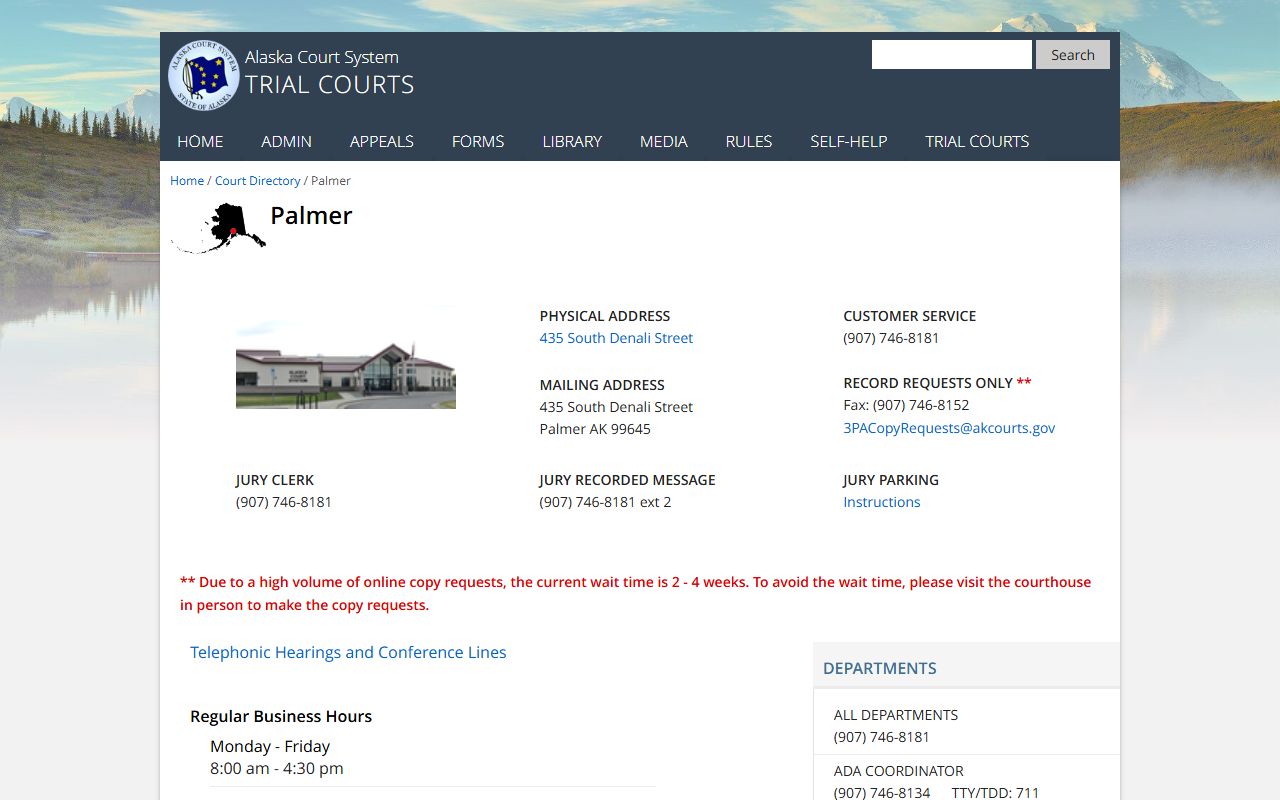
That image works well here because Big Lake traffic questions usually begin with the same Palmer court desk that handles the rest of the Mat-Su area.
The DMV points image from the Alaska DMV points page shows the license side that often follows a traffic ticket search.
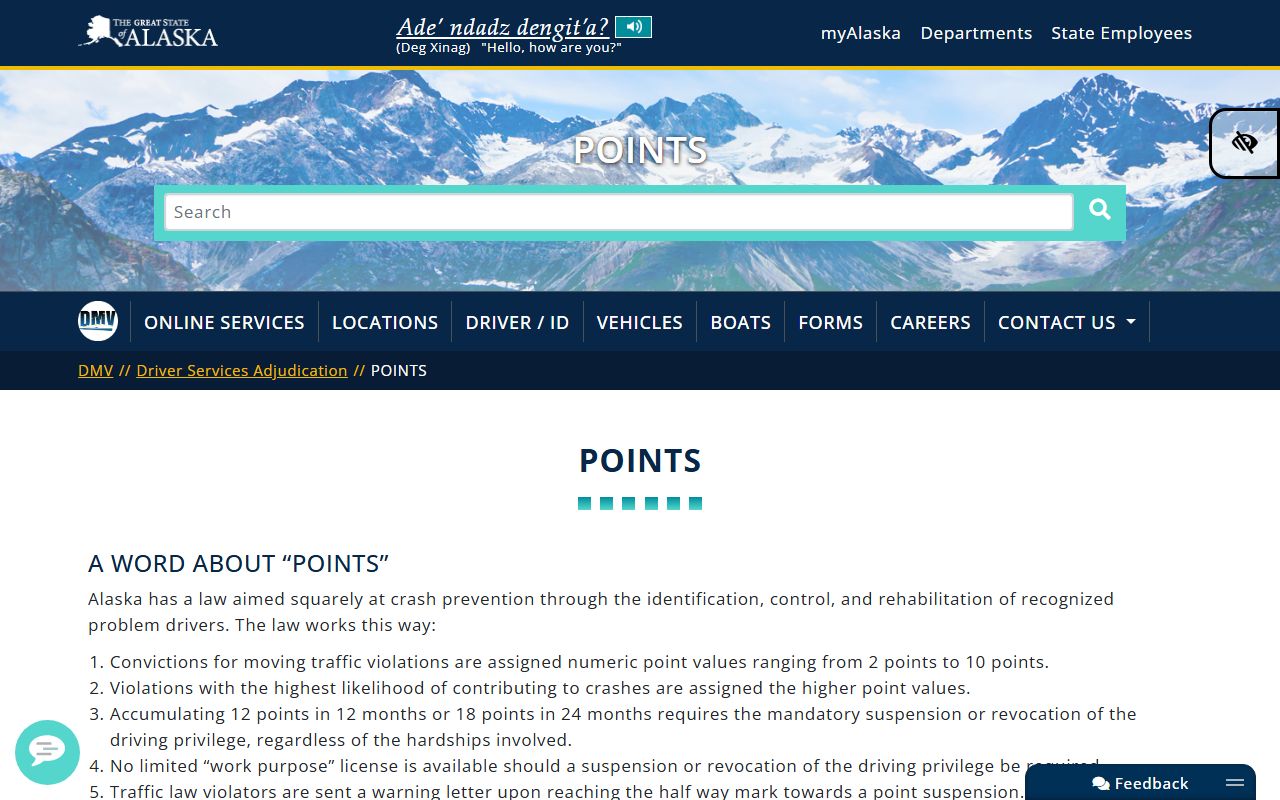
That fallback image keeps the page on an official source and reminds you that a traffic case can reach the DMV even after the court step is done.
Big Lake Traffic Ticket Records Hearings
The hearings page at courts.alaska.gov/trialcourts/hearings.htm is the place to check when Big Lake traffic ticket records need a phone date or a courtroom time. The Mat-Su family uses the toll-free conference line 1-888-788-0099, and the in-custody docket uses Meeting ID 283 884 5637. That gives you the main dial-in path if the court uses a remote setup. If the notice says to appear by phone, the hearings page is the safest place to confirm the number and the meeting ID before the hearing starts.
Big Lake traffic ticket records can also land on the regular arraignment schedule. The hearings page says out-of-custody arraignments are heard in person on Tuesdays at 8:30 a.m., and telephonic hearing requests are made with TF-710. That is useful because it separates a simple status search from a real court appearance. Some cases need a drive to the courthouse. Others need a form and a call. The hearing page makes that difference clear so the case does not get missed.
If you are not sure whether the citation is ready for hearing, check CourtView first and then use the directory. A file that is not yet posted may need a clerk answer instead of another web search. Big Lake traffic ticket records are easier to manage when the hearing schedule, the directory, and the online case view all match the same record.
Big Lake Traffic Ticket Records Payments
The Alaska Court System payment page at courts.alaska.gov/trialcourts/payments.htm explains how traffic and other minor offense tickets are paid. For Big Lake traffic ticket records, that page is the place to confirm whether the citation belongs in the court payment lane or somewhere else. If the matter is already public in CourtView, the court payment page is the best match. If it is still a fresh local citation, the ticket may need a different route. Reading the payment guidance first keeps the wrong payment from becoming a second problem.
The CourtView information page is worth reading with it. It explains that some balances move to collections and that not every detail appears online. That matters for Big Lake traffic ticket records because a case can look open even when the payment side has already shifted. If the ticket has changed status, the public record may not show the whole story. CourtView information gives you the broader view before you call the clerk or send money.
If you need a paper copy, the Palmer directory lists the records fax at (907) 746-8152 and the records email at 3PACopyRequests@akcourts.gov. Those contacts help when the public search is not enough. They also help when Big Lake traffic ticket records need the actual file, not just the status line. A quick copy request can save time when the case is old, the hearing is near, or the payment question is not clear from the screen.
Note: Big Lake traffic ticket records are easier to sort when you check the payment page before you assume the citation still belongs with the original office.
Big Lake Traffic Ticket Records Forms
The forms catalog at courts.alaska.gov/forms/index.htm is the official paperwork source for Big Lake traffic ticket records. If a case needs a response, a hearing request, or another filing, the forms page keeps the work in the Alaska Court System. That is better than trying to build a filing from a copied sample or a third-party site. It keeps the record search tied to the right office and to the right form.
The DMV points page at dmv.alaska.gov/driver-services-adjudication/points/ belongs in the same search set because traffic tickets can affect the license after the court case ends. Alaska assigns point values to moving violations, and the state says enough points can lead to suspension or revocation. For Big Lake traffic ticket records, that means the result is not only about the ticket amount. It can also change the driving record, which is why the DMV page matters.
The Alaska DMV homepage at dmv.alaska.gov gives the wider driver-services path. Together with the court directory, CourtView, hearings, payments, and forms, it gives Big Lake traffic ticket records a full official route from the citation to the final license question.