
Eagle River Traffic Ticket Records
Eagle River traffic ticket records usually start on the Anchorage side of the Alaska court system. That is the best way to sort a city citation from a court case. If you need Eagle River traffic ticket records, begin with the Anchorage court directory, then check CourtView and the APD payment page to see where the case sits. That helps you find the right office fast. It also keeps you from sending a payment, request, or hearing question to the wrong place when the ticket already moved into a public record.
Eagle River Traffic Ticket Records Search
The Anchorage court directory at courts.alaska.gov/courtdir/3an.htm is the first place to check for Eagle River traffic ticket records. It lists the Anchorage courthouse contacts, the traffic line, and the records number that help you reach the right clerk. That matters because Eagle River citations often move through the Anchorage office even when the stop happened closer to Eagle River. A quick call can tell you if the ticket is still with the city or already sitting in the court system.
For a public case check, use CourtView case search. The court says CourtView is not a criminal history report. It is a case search tool. That means it can show a party name, case number, or status, but it does not replace the full paper file. The CourtView information page also explains that some details do not appear online and that balances can move to collections. For Eagle River traffic ticket records, that makes the directory and the case search work together instead of separately.
If the citation came from Anchorage police, the city page at anchoragepolice.com/pay-a-fine is the clean payment route. It handles recent municipal traffic tickets and shows the payment choices in plain language. If the ticket has already entered the court side, the court payment page becomes the better match. That split is important. One page is for city tickets. The other is for court cases. Eagle River drivers save time when they match the source before they act.
The Anchorage court directory at courts.alaska.gov/courtdir/3an.htm is the official office page for Eagle River traffic ticket records that move through Anchorage.
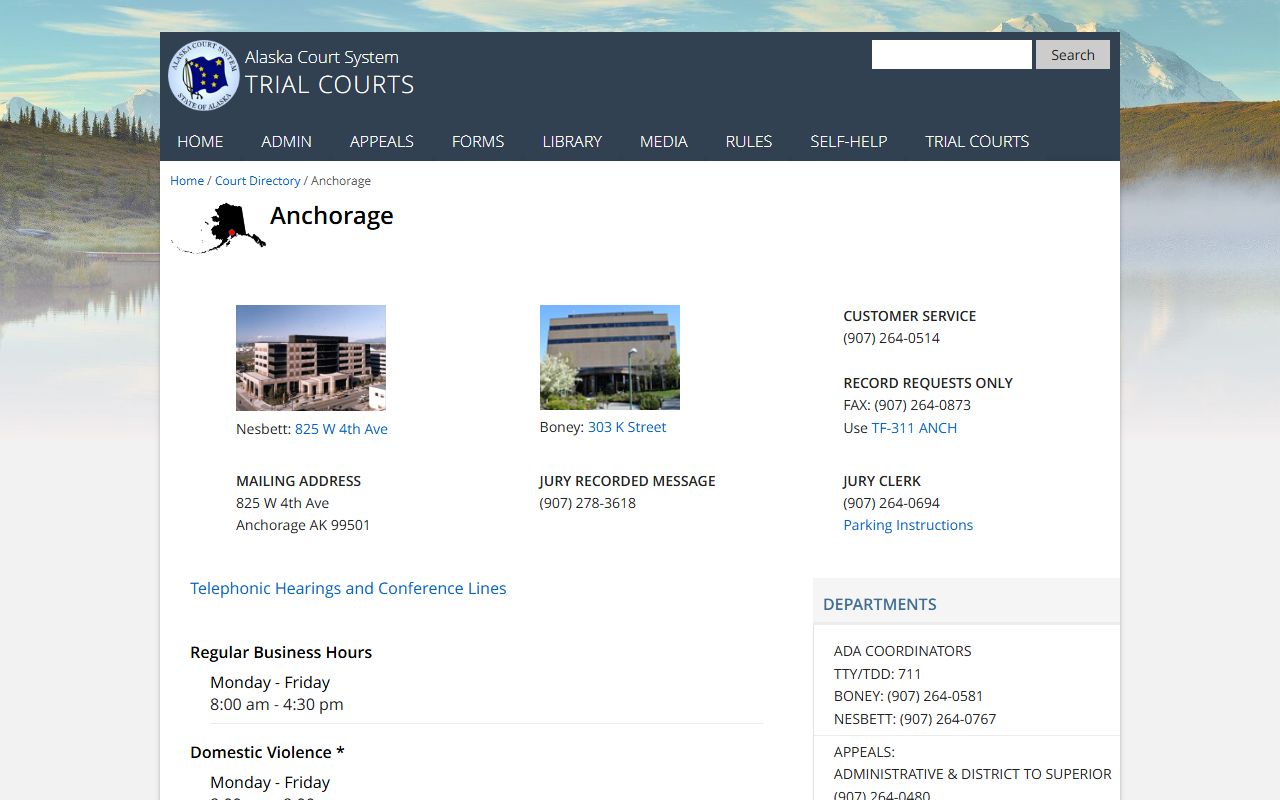
Use it when you need the court desk, the traffic line, or the first clue about where the file lives now.
The Anchorage Police Department payment page at www.anchoragepolice.com/pay-a-fine tells you when a recent Eagle River traffic ticket still belongs with the city.
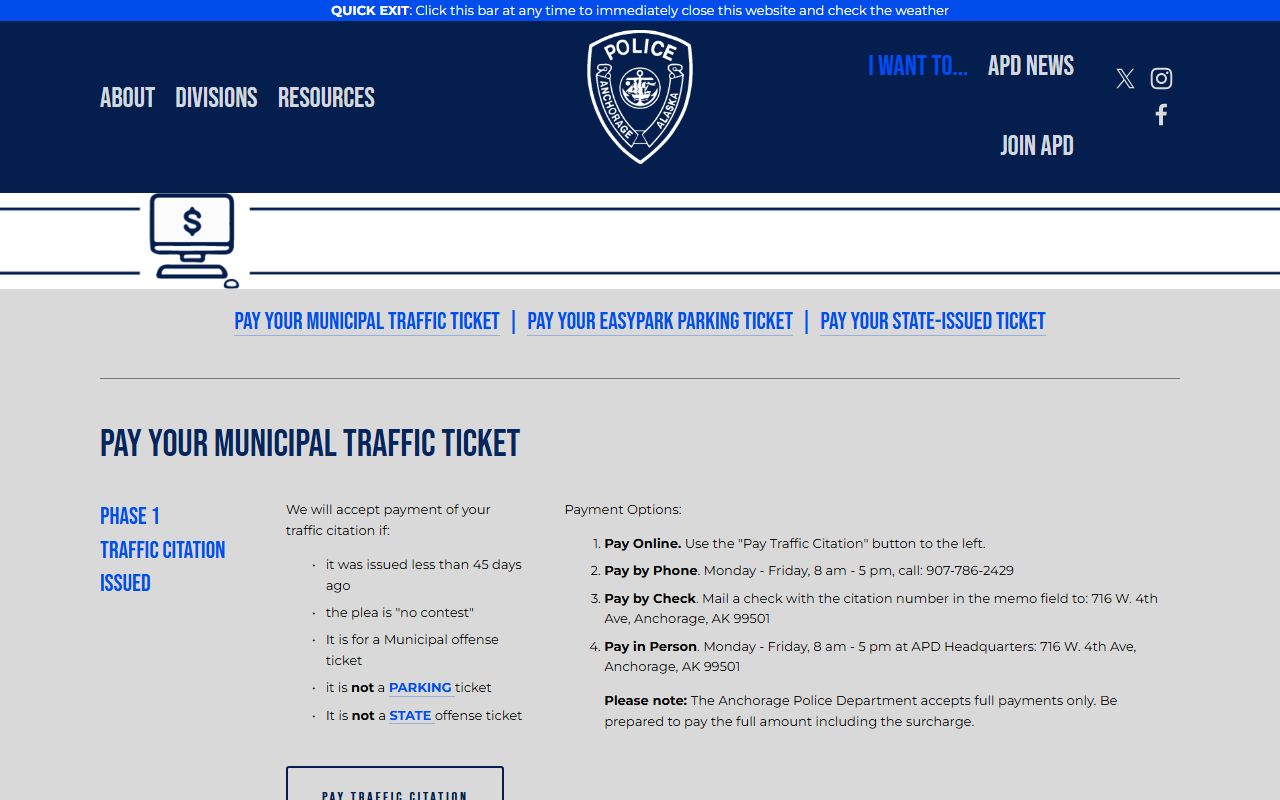
That page matters when the ticket is municipal and has not yet become a court file.
Eagle River Traffic Ticket Records Payments
The Alaska Court System payment page at courts.alaska.gov/trialcourts/payments.htm explains how court traffic tickets are paid and when a city citation must stay with the city office. For Eagle River traffic ticket records, that split is the main thing to watch. If the citation is still a recent Anchorage Police Department matter, use the city page. If the record has moved into the court system, the court payment guidance is the safer route.
The court payment page also helps when a balance has already shifted. A ticket can move from a fresh citation to a live court case, then to a collection step. That is why Eagle River traffic ticket records are not just a search problem. They are also a routing problem. The right office can change after the hearing date, after the payment window, or after a clerk posts the case into CourtView. The court page is the best place to see that path clearly.
For city citations, APD says recent tickets can be paid online, by phone, by mail, or in person. For court tickets, the Alaska Court System payment page gives the court process and the office split. If you are unsure which route applies, the safest move is to check the court directory first. A short check saves a lot of backtracking later.
The Alaska Court System payment page at courts.alaska.gov/trialcourts/payments.htm explains the difference between city payment and court payment for Eagle River traffic ticket records.
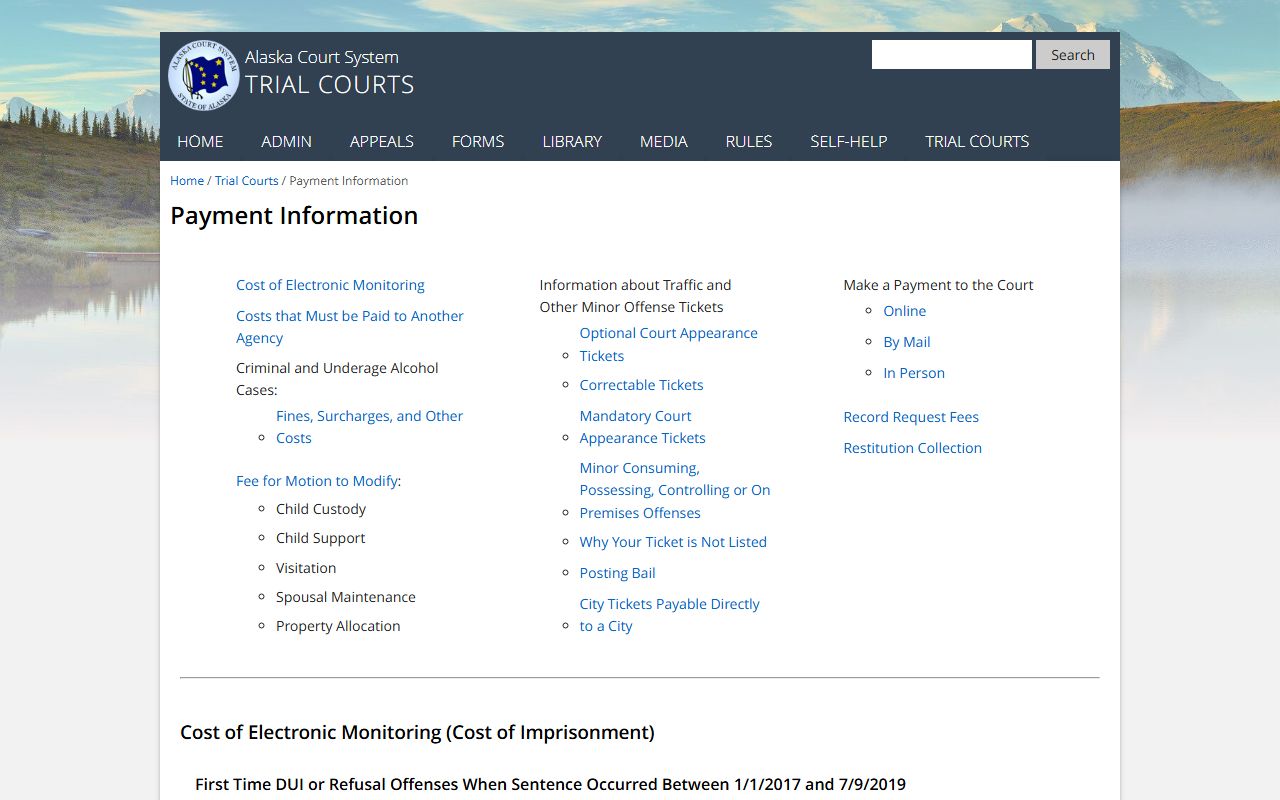
That official page is useful when the ticket has already moved out of the city window and into the court side of the record.
Eagle River Traffic Ticket Records and DMV Points
The DMV points page at dmv.alaska.gov/driver-services-adjudication/points/ explains why Eagle River traffic ticket records can affect more than the fine. Alaska assigns point values to moving violations. The state says 12 points in 12 months or 18 points in 24 months can trigger suspension or revocation. That means a ticket search should include the license side, not just the court side. A record may look small until the points start to stack up.
The DMV also says a warning letter can arrive when a driver reaches the halfway mark toward suspension. A defensive driver course may reduce points once every 12 months. That makes the points page worth reading before you pay if you still plan to challenge the citation. Eagle River traffic ticket records can look routine at first, but the DMV result can last longer than the court date. It is smart to check both pages before you decide what to do next.
The main DMV home page at dmv.alaska.gov gives you the broader driver-services doorway. If a traffic case has already hit your record, the home page and the points page work together. One shows the department path. The other shows the impact. That is enough for most drivers who want the facts before they act.
Note: Use the court directory first when the ticket source is unclear, because city payment and court payment are not the same thing.
Eagle River Traffic Ticket Records Forms
The Alaska Court System forms catalog at courts.alaska.gov/forms/index.htm is the official place to look when Eagle River traffic ticket records need a response, a request, or another court paper. The forms page keeps the work inside the court system and away from guesswork. That matters when the citation is active and you need the correct form before you contact the clerk or make a filing choice.
If the ticket has already become a court matter, the forms page can help you find the right request path before you make a call. Eagle River traffic ticket records often need a mix of search, payment, and follow-up. The forms catalog helps with that follow-up step. It is also useful when you need to ask for copies, enter a response, or check what paperwork the court expects next.
For a compact official set, keep the Anchorage court directory, the APD payment page, CourtView case search, the CourtView information page, the court payment page, the DMV points page, the DMV home page, and the forms catalog together. That set covers the full path for Eagle River traffic ticket records without using a third-party site that does not control the record.
The state forms image below is a good reminder that the record path does not end with a search result.
The forms catalog at courts.alaska.gov/forms/index.htm is the official backup when Eagle River traffic ticket records need paper work instead of another search.
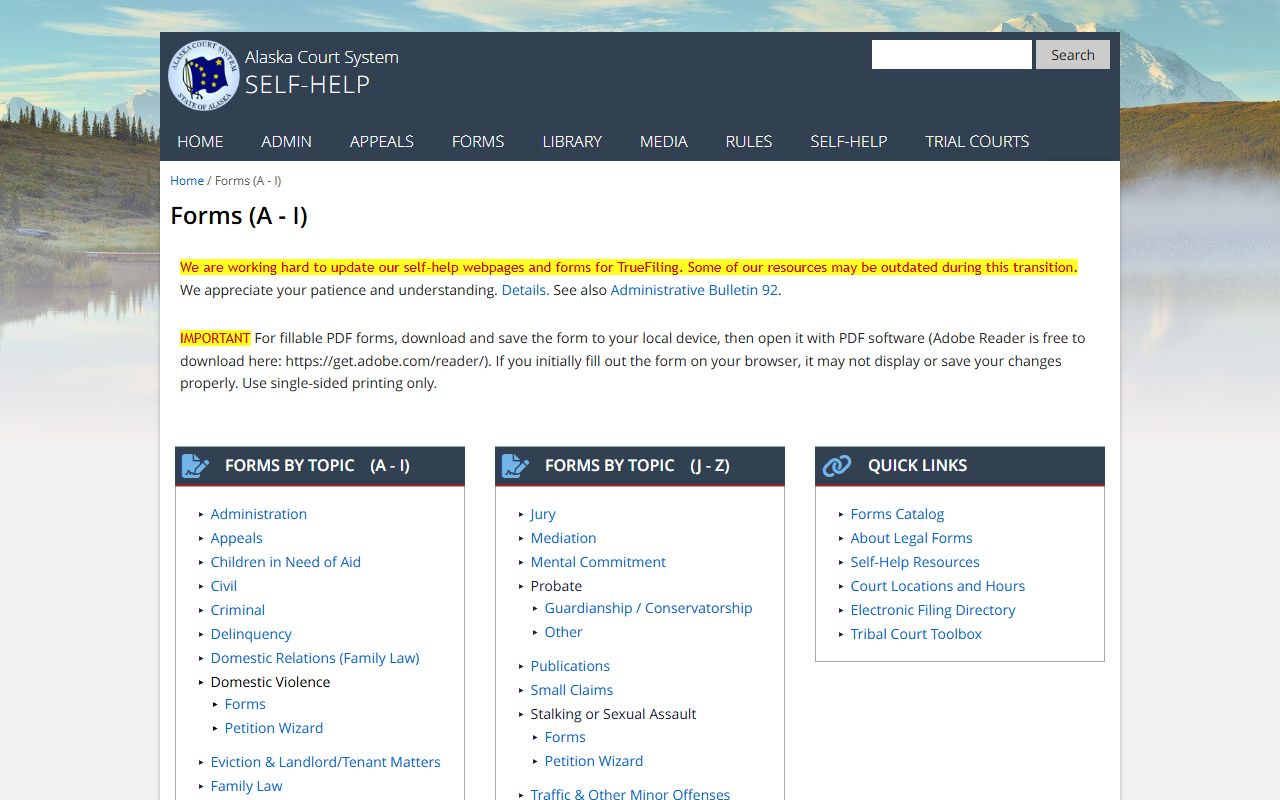
That page is useful when you need the court's own paperwork before you go any farther.