
Fairbanks Traffic Ticket Records
Fairbanks traffic ticket records can move through more than one office, so the first step is knowing whether the citation is with the city, the court, or a hearing line. The Fairbanks Court Directory gives the main numbers for minor offense and traffic help, while CourtView shows whether a case is already in the court system. If you need Fairbanks traffic ticket records, start with the local court contacts, then check the public case search and payment notes. That keeps the search simple and cuts down on back-and-forth.
Fairbanks Traffic Ticket Records Search
The Fairbanks Court Directory at courts.alaska.gov/courtdir/4fa.htm gives the traffic and minor offense phone line, the general court phone numbers, and the hours that matter when you need help fast. The directory says most customer service can be handled by telephone, and it points traffic questions to the minor offense or traffic line. That is a good place to begin when you are not sure if the citation is a court matter, a city matter, or something that still needs to be filed.
Fairbanks traffic ticket records can also be checked through CourtView case search. The court warns that CourtView is not a criminal history report. It is a case lookup page. That means it can help you confirm a case status, a party name, or a ticket number, but it does not replace the full file. The CourtView information page also explains that some records do not appear online and some older cases may be missing from the public index. For Fairbanks, that means the directory and the courthouse still matter just as much as the search screen.
The same Fairbanks directory page notes that the law library is open Monday through Thursday, and that TrueFiling is used for civil, small claims, and minor offense cases. That is useful if your traffic matter has grown into a related filing or if you need to submit a document tied to a minor offense. The directory also gives you a direct path to the office that can answer questions about the case before you make a trip downtown.
The Fairbanks Court Directory at the Alaska Court System lays out the traffic line, phone support, and the choice between phone service and a courthouse visit.
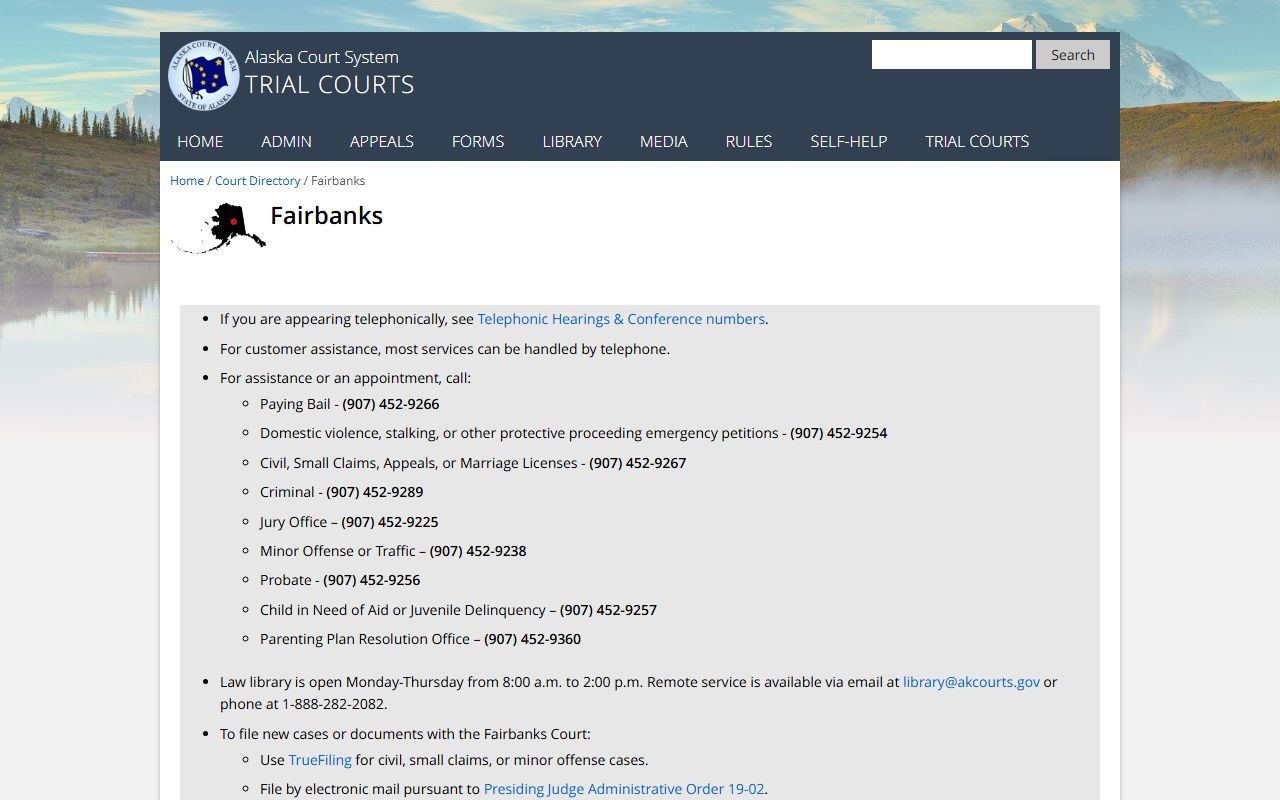
That page is the cleanest local starting point when you need the right office for a traffic case or a follow-up question.
The Fairbanks telephonic hearings page at courts.alaska.gov/trialcourts/hearings.htm shows that Fairbanks hearings use the state conference line system and courtroom meeting IDs.
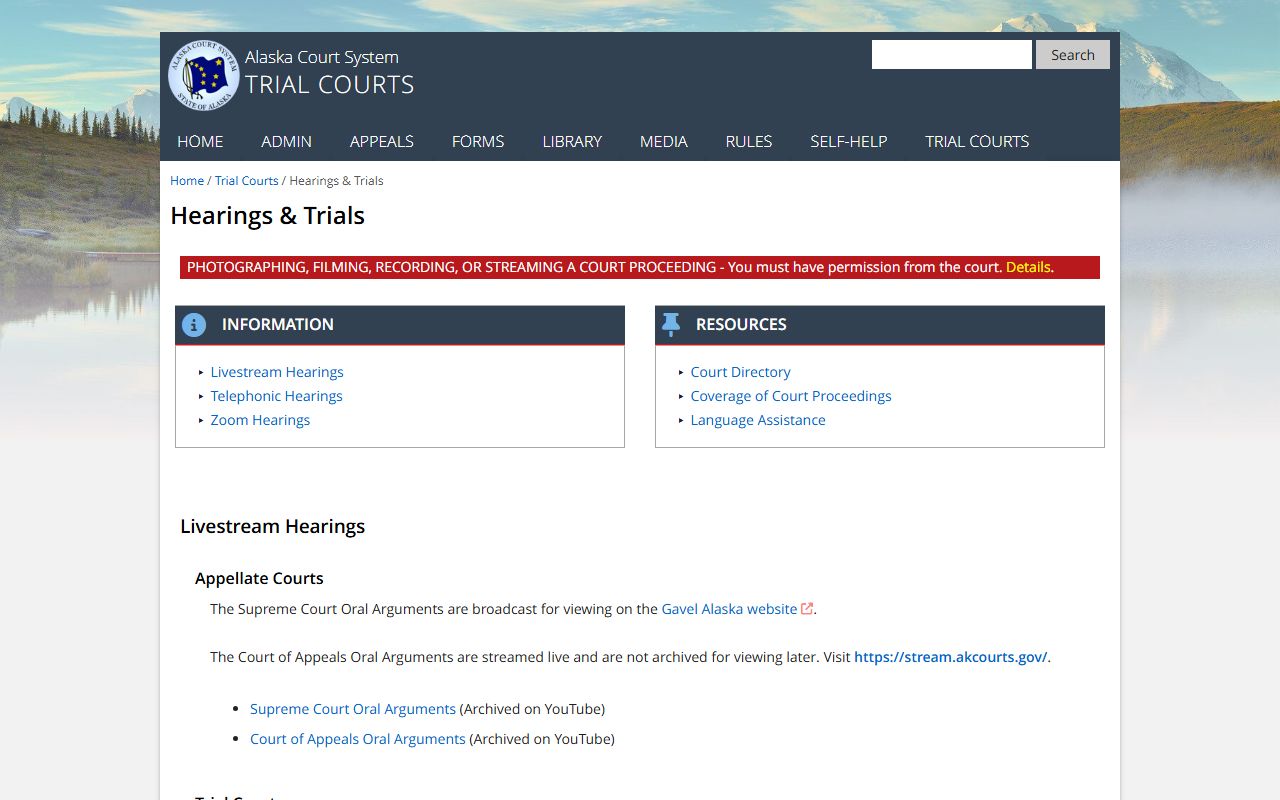
That matters if your ticket is on the calendar and you need to appear by phone instead of in person.
Fairbanks Traffic Ticket Records Hearings
The Alaska Court System hearings page gives the statewide phone process. You call the toll-free conference line first, then enter the meeting ID for the courtroom or judge. That page also lists Fairbanks under the court locations that use telephonic hearings. For a person with a ticket on the calendar, that detail is not small. It tells you how the hearing is set up, what number to use, and why the meeting ID matters. It also reduces the chance that you miss the right call-in step.
Fairbanks traffic ticket records often become easier to understand when you tie them to the hearing channel. A minor offense may move through the traffic line first, then into CourtView, then into a hearing. If the court says you need to appear, the hearing page is the place to confirm the call-in method. If you are unsure which courtroom or judge applies, the court directory and hearing page work together. One gives you the office. The other gives you the phone entry path.
Because the court uses different meeting IDs for different hearings, it is smart to keep the hearing page open while you read the directory. That way you can match the record to the right session without mixing up a criminal block, a minor offense matter, or a civil call. The result is simple. You spend less time guessing and more time handling the ticket.
The hearings page at courts.alaska.gov/trialcourts/hearings.htm explains the conference line and meeting ID process that Fairbanks uses for remote court appearances.
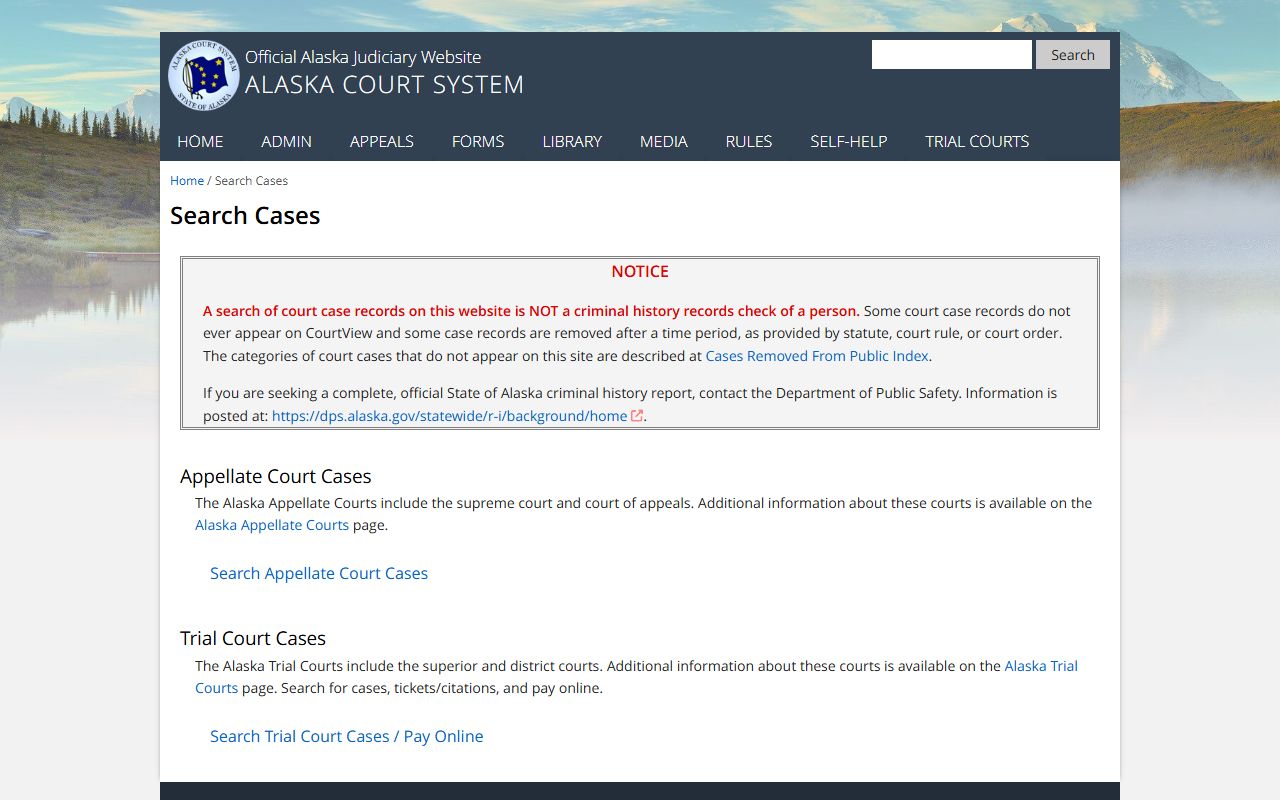
That state image is a useful fallback here because it matches the online search step and fills the gap left by the skipped third-party source in the manifest.
Fairbanks Traffic Ticket Records Payments
The Alaska Court System payment page explains how traffic and other minor offense tickets are paid, and it also explains when a ticket must be paid directly to a city. For Fairbanks traffic ticket records, that distinction matters. The page says recent traffic tickets issued by the Fairbanks Police Department must be paid directly to the Fairbanks City Clerk's Office. It also notes that Fairbanks Parking Authority tickets follow a separate payment path. That keeps a driver from sending money to the wrong place.
The payment page also tells you that court tickets can be paid online, by mail, or in person, depending on the case. If a Fairbanks ticket is already in CourtView, the court page helps you see whether the balance is still active, transferred, or ready for online payment. It also warns that some offenses require a court appearance instead of a simple payment. That is useful when the citation looks small on its face but still needs a judge or a hearing line.
Fairbanks traffic ticket records often touch the payment page and the court directory at the same time. One page tells you where to send the payment. The other gives you the office phone and traffic line. When you use both, you get a cleaner picture of the case and the correct next step.
Fairbanks Traffic Ticket Records and DMV Points
The DMV points page is important for Fairbanks traffic ticket records because a paid or convicted moving violation can still add points to a driving record. Alaska uses point values from 2 to 10 for moving violations. The DMV says 12 points in 12 months or 18 points in 24 months can trigger suspension or revocation. That means the citation does not end when the fine is paid. It can keep moving through the licensing side too.
The DMV page also says drivers may get a warning letter at the halfway mark toward suspension. It notes that a defensive driver course may reduce points once every 12 months, and it warns drivers not to pay first if they plan to challenge the ticket in court. That is a strong reminder for people in Fairbanks who want to compare the citation, the court record, and the DMV effect before they act.
For a broader state check, the Alaska DMV homepage at dmv.alaska.gov and the points page at dmv.alaska.gov/driver-services-adjudication/points/ belong in the same search set as the court pages. Used together, they show both the court side and the license side of a traffic case.
Note: Fairbanks traffic questions often move faster when you confirm the office, the hearing type, and the ticket source before you send payment.
Fairbanks Traffic Ticket Records Forms
Fairbanks traffic ticket records can also lead you to the Alaska Court System forms catalog. The Fairbanks Court Directory says TrueFiling is used for civil, small claims, and minor offense filings, so the forms page is a good companion when your traffic matter needs a response or a related filing. The forms catalog helps you stay with the court's own paperwork instead of relying on guesswork. That matters when a citation is old, disputed, or tied to another minor offense issue.
If you want a compact resource set, keep the directory, the hearings page, the payment page, the CourtView search page, the CourtView information page, the forms catalog, and the DMV points page together. That set covers the main steps for Fairbanks traffic ticket records. It covers where to call, where to look, where to pay, and what happens to a license if points stack up.